Doctor First or Personal Injury Attorney First? Why Florida Accident Victims Should Start With a Medical Evaluation
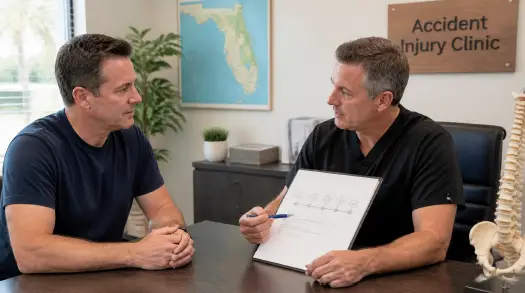
A crash can leave you shaken, sore, and unsure what to do next. You may be standing beside your vehicle near I-4, US-1, Florida’s Turnpike, or a busy intersection while adrenaline masks the pain. Your first thoughts may be about repairs, insurance calls, or whether you need a personal injury attorney.
Here is a practical starting point: after emergency needs are addressed, seek a qualified medical evaluation promptly: generally within 14 days of a Florida motor vehicle accident.
A medical evaluation can help identify and document injuries before you make important decisions about a personal injury claim. An attorney can then use that information to evaluate liability, damages, permanent impairment issues, and possible compensation.
Medical professionals and attorneys serve different roles. You may contact an attorney at any time, especially after a serious crash or when legal deadlines may apply. However, beginning with medical care can help you understand what happened to your body and create an accurate record of your injuries.
The Practical Sequence: Medical Evaluation First, Legal Consultation Next
Step 1: Seek a qualified medical evaluation promptly
Florida’s PIP 14 day rule generally requires you to receive initial services and care within 14 days after a motor vehicle accident for PIP medical benefits to be payable. This requirement is found in Florida Statute § 627.736.
That does not mean you should wait if you are seriously injured. Call 911 or go to an emergency facility when appropriate. For less urgent accident-related symptoms, an auto accident doctor or accident injury clinic may be able to evaluate you and recommend appropriate follow-up care.
During an evaluation, a qualified provider may:
• Ask how the crash occurred and when it happened.
• Examine your neck, back, shoulders, joints, and other affected areas.
• Document symptoms such as headaches, stiffness, numbness, weakness, or limited movement.
• Recommend X-rays or other testing when medically appropriate.
• Create a care plan based on your examination findings.
• Recommend additional evaluation or referral when your symptoms require it.
You may feel fine immediately after a collision. That feeling does not prove that you are uninjured. The blur of adrenaline can temporarily quiet pain. Symptoms may appear hours or days later, including a pounding headache, a tight neck, lower-back pain, or pins-and-needles sensations in an arm or leg.
Feeling fine is not the same as being medically cleared.

Step 2: Understand what your Florida PIP insurance may provide
Florida PIP insurance may provide up to $10,000 in benefits per person per accident, subject to the policy, Florida law, medical findings, provider qualifications, documentation, and other facts.
The 14-day evaluation is important, but it does not automatically guarantee:
• $10,000 in benefits.
• PIP coverage in every situation.
• Payment of every medical bill.
• A specific diagnosis.
• A finding of an Emergency Medical Condition, sometimes called an EMC.
• Approval of a claim by your insurance company.
Under Florida law, the amount of available PIP medical benefits can depend on whether a qualifying provider determines that you have an EMC. Without an applicable EMC determination, benefits may be limited. Your policy and the specific facts of your accident also matter.
This is one of the hidden rules many drivers do not learn until after a crash: the calendar starts on the date of the accident, not the date your pain becomes severe.

Step 3: Use your medical documentation when evaluating legal options
Once your injuries are evaluated and documented, you have more information to discuss with a personal injury attorney Florida residents can consult about their legal rights.
A medical provider may document:
• Your reported symptoms.
• Objective examination findings.
• Diagnoses within the provider’s scope.
• The connection between your symptoms and the accident, based on the medical evaluation.
• Recommended treatment or testing.
• Whether additional medical referrals may be appropriate.
• Your progress, limitations, and response to care.
Think of medical documentation as a factual map. It does not decide your legal claim, but it can help show what you experienced, when symptoms began, what care was recommended, and whether your condition continued.
A personal injury attorney has a different job. An attorney may evaluate:
• Who may be legally responsible for the accident.
• Whether another driver, property owner, employer, or other party may be liable.
• Insurance coverage and available claims.
• Medical expenses and future care.
• Lost income and other economic losses.
• Pain, limitations, and disruption to your daily life.
• Permanent impairment issues and potential compensation.
• Applicable legal deadlines and filing requirements.
A doctor does not determine your legal compensation. An attorney does not diagnose your injuries. You may need both professionals to address the medical and legal sides of a serious accident.
Why Early Medical Records Matter in a Personal Injury Claim
After a crash on I-95, Florida’s Turnpike, US-27, Tamiami Trail, or a local roadway, it can be difficult to remember every detail. Your medical record helps organize the health-related portion of what happened.
Prompt evaluation may help you:
• Identify injuries that are not obvious at the scene.
• Avoid ignoring symptoms that could become more difficult to manage.
• Follow a medically appropriate care plan.
• Connect your symptoms with the reported accident history.
• Preserve records that an attorney may later review.
• Make more informed decisions about whether to pursue a legal claim.
Do not exaggerate symptoms. Do not minimize them either. Tell the provider what you actually feel, including pain that comes and goes, sleep problems, dizziness, headaches, or difficulty performing ordinary tasks.
If your symptoms change, tell your provider. A new symptom may be important. A worsening symptom may require prompt attention.
Can a Medical Office Help You Find an Attorney?
You may ask a provider or scheduling service whether it can provide general information or names of attorneys to consider. However, availability depends on applicable law, office policy, and the circumstances.
A medical office or scheduling service should not:
• Steer you to a particular attorney.
• Promise that an attorney will accept your case.
• Guarantee a settlement or verdict.
• Promise a specific compensation amount.
• Accept or pay an improper referral fee.
• Replace your own evaluation of legal counsel.
You may ask for up to three attorney names to interview, when permitted. You should independently contact each attorney, ask questions, review the representation agreement, and choose the lawyer you believe fits your needs.
You can also contact an attorney on your own at any point. If your crash involved severe injuries, a death, disputed fault, a commercial vehicle, a government vehicle, or a possible claim deadline, consider seeking legal advice promptly.
What to Do After a Florida Accident
When it is safe to do so, use this checklist:
1. Call 911 for emergencies. Do not move an injured person unless necessary to avoid immediate danger.
2. Seek a prompt medical evaluation. Do not wait for pain to become severe.
3. Note the accident date. The Florida PIP 14-day rule is tied to that date.
4. Notify your insurance company according to your policy requirements.
5. Keep medical records and bills. Save explanations of benefits, prescriptions, receipts, and appointment information.
6. Take photographs when safe. Document vehicles, roadway conditions, visible injuries, and property damage.
7. Avoid guessing about fault. Give accurate facts and let the appropriate professionals evaluate responsibility.
8. Consider an attorney consultation if your injuries, losses, or legal questions are significant.
If you need help locating an evaluation with a Florida accident injury chiropractor who accepts PIP, contact The Medical Scheduling Department at 855-SCHED-IT (855-724-3348). We can help connect you with scheduling options. You remain free to choose your medical provider and legal counsel.
Frequently Asked Questions
Should I see a doctor before calling a personal injury attorney?
A prompt medical evaluation is a practical first step for understanding and documenting your injuries. However, you may contact a personal injury attorney at any time. After a serious crash or when legal deadlines may apply, speaking with an attorney early can be especially important.
What is the Florida PIP 14 day rule?
Generally, you must receive initial services and care from a qualifying provider within 14 days after a motor vehicle accident for PIP medical benefits to be payable. The rule does not guarantee coverage or payment, and additional requirements may apply.
Does a medical evaluation guarantee the full $10,000 in Florida PIP benefits?
No. Florida PIP insurance may provide up to $10,000, but the available amount depends on the policy, statute, medical findings, provider qualifications, documentation, and other facts. An applicable Emergency Medical Condition determination may affect the amount of available medical benefits.
Can a chiropractor be a personal injury doctor?
A chiropractic physician may provide an accident-related evaluation and treatment within the chiropractor’s scope of practice and may qualify as an initial provider under Florida PIP law. A chiropractor does not replace an emergency physician, specialist, or attorney. Additional care or referral may be appropriate based on your symptoms.
What if I have delayed symptoms?
Contact a qualified medical provider promptly and explain when the accident happened, when your symptoms began, and how they have changed. Seek emergency help for severe or concerning symptoms,including chest pain, trouble breathing, loss of consciousness, new weakness, severe headache, confusion, or uncontrolled bleeding.
Can I hire an attorney before seeing a doctor?
Yes. You have the right to contact an attorney at any point. A medical evaluation and legal consultation address different needs, so one does not prevent you from seeking the other.
Can The Medical Scheduling Department recommend an attorney?
When permitted by applicable law and office policy, you may ask whether general information or up to three attorney names are available for you to consider. Any names provided are not an endorsement or guarantee. You should independently interview and select your attorney.
How can I schedule an accident injury evaluation?
Call 855-SCHED-IT (855-724-3348). The Medical Scheduling Department helps connect Florida accident victims with accident injury chiropractors who accept PIP, subject to provider availability and your circumstances.
Medical and Legal Disclaimers
This article is for general educational and informational purposes only. It is not medical advice, a diagnosis, treatment recommendation, or a substitute for evaluation by a qualified medical professional. If you have an emergency or serious symptoms, call 911 or seek emergency medical care immediately.
The information about Florida PIP insurance and the Florida PIP 14-day rule is a general summary and may not apply to every policy, accident, provider, or claim. Florida law, insurance policies, medical findings, provider qualifications, documentation, and claim facts can affect eligibility and payment. The 14-day evaluation does not guarantee $10,000 in PIP benefits, coverage, claim approval, or reimbursement.
The Medical Scheduling Department LLC and AccidentDoc4U are scheduling and connection services, not medical providers and not law firms. They do not diagnose injuries, provide medical treatment, provide legal advice, determine liability, certify permanent impairment, guarantee PIP coverage, guarantee an attorney outcome, or guarantee compensation.
Any attorney names or general attorney information that may be provided are not legal recommendations, endorsements, or guarantees. Availability may depend on applicable law and office policy. You should independently investigate, interview, and select any attorney, and you should discuss your specific facts and deadlines with a Florida-licensed attorney.
No attorney-client relationship, doctor-patient relationship, or provider-patient relationship is created by reading this article, visiting AccidentDoc4U.com, or calling 855-SCHED-IT (855-724-3348). This article is not a complete statement of Florida law and may not reflect later legal changes. For advice about your medical condition, insurance benefits, legal rights, or potential compensation, consult the appropriate licensed professional.
