Hydroplaning 101: How to Stay Safe on Florida’s Wet Roads (and What to Do if You Slip)
Hydroplaning 101: How to Stay Safe on Florida’s Wet Roads (and What to Do if You Slip)

If you’ve ever been driving down I-4 through Polk County or navigating the Golden Glades Interchange in Miami when a sudden tropical downpour hits, you know that immediate "blur of adrenaline." One second, you’re cruising with the flow of traffic; the next, the world turns gray, the rain is hammering your windshield, and your steering wheel feels... light.
That "light" feeling is one of the most terrifying sensations a driver can experience. It’s the moment your tires lose their grip on the pavement and start to surf on a thin layer of water. At The Medical Scheduling Department LLC, we see the aftermath of these moments every day. We know that even if you manage to regain control, the physical toll of that "near-miss" or a minor slide can stay with you long after the clouds clear.
In this guide, we’re going to break down the "hidden rules" of wet-weather driving in Florida, how to handle your car when it starts to slip, and why what you do in the 14 days following a rainy-day mishap is the most important decision you'll make for your health and your wallet.
The Mechanics of the "Slip": What is Hydroplaning?
Think of your car tires like a squeegee. Their job is to push water out of the way so the rubber can grab the asphalt. But when the rain falls faster than your tires can clear it, common during our afternoon summer storms, a wedge of water builds up underneath the tread.

Suddenly, your 3,000-pound vehicle isn't a car anymore; it’s a sled. You are essentially "skipping" across the water like a stone. It only takes 1/10th of an inch of water for this to happen. If you’re traveling over 35 MPH on worn tires, or over 50 MPH even with good ones, you are at risk.
Pro Tip: This is especially dangerous on curved sections of I-95 or the interchanges where I-275 meets I-4 in Tampa. These areas are known "hotspots" where drainage can struggle to keep up with Florida’s intensity.
How to Avoid the Slide (Before it Happens)
Prevention is your best friend when the sky opens up. Here is how you stay grounded:
• Respect the "Florida 50": Even if the speed limit is 70, when the rain hits, slow down. High speeds are the primary ingredient in the hydroplaning recipe.
• Check Your Tread: If your tires are looking a bit "bald," they can’t channel water. Use the penny test, if you can see the top of Lincoln’s head, you’re in trouble.
• Avoid Standing Water: See a shimmering patch of asphalt or a deep puddle near the shoulder? Steer clear. Those are the zones where your tires lose the battle against physics.
• Turn Off Cruise Control: Never use cruise control in the rain. You need to be in total, manual control of your acceleration to react to the road.
The "Panic Moment": What to Do if You Start Hydroplaning
If you feel that sickening slide, your instincts will tell you to do two things: slam the brakes and jerk the wheel. Do neither.
1. Ease off the gas: Don’t stomp on the brakes. Simply lift your foot off the accelerator. This allows the vehicle to slow down naturally, which helps the tires "find" the pavement again.
2. Steer into the slip: If the back of your car is sliding to the left, gently turn your steering wheel to the left. It sounds counterintuitive, but it’s the only way to realign your tires with the direction of travel.
3. Wait for the "Grab": You will feel a distinct moment where the tires bite back into the road. Once you feel that traction, you can lightly apply the brakes to regain full control.
The "Fine" Fallacy: Why Your Body Needs an Evaluation
Often, after a hydroplaning incident, even one where you don't hit another car, you might feel "fine." Maybe your heart is racing, or you have a bit of a "pins and needles" feeling in your arms. That’s adrenaline masking the reality.
When a car jolts or slides, your body undergoes massive internal stress. Think of your brain like a soft sponge inside a hard plastic bowl (your skull). When the car jerks, that "sponge" bounces against the hard walls. This can lead to Traumatic Brain Injuries (TBI) or severe whiplash that doesn't show symptoms for days.

The 14-Day Rule: Don’t Lose Your $10,000 Benefit
In Florida, there is a vital deadline you cannot afford to miss. Under state law, you have exactly 14 days from the date of your accident to be evaluated by a medical professional to qualify for your Personal Injury Protection (PIP) benefits.
If you wait until day 15 because "the neck pain finally got too bad," you may have forfeited up to $10,000 in coverage that could have paid for your treatment. This is a "hidden rule" that catches thousands of Floridians off guard every year.
Why a Chiropractic Evaluation is Better Than the ER
When you’ve been in a wet-weather accident, your first thought might be the Emergency Room or an Urgent Care center. However, those environments are often filled with people suffering from contagious llnesses.
At The Medical Scheduling Department LLC, we connect you with a specialized network of accident injury chiropractors.
• Specialized Focus: We focus specifically on musculoskeletal injuries like whiplash and spinal misalignment, the things ERs often miss.
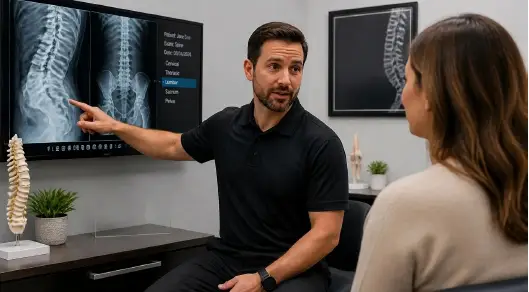
• Modern X-Rays: We use precise imaging to see exactly what happened to your spine during the "jolt."
• A Calmer Environment: Skip the 6-hour wait in a room full of sick people. Our clinics are clean, modern, and designed for wellness.
Frequently Asked Questions
"I didn't hit anyone, I just spun out. Does PIP still apply?" Yes. PIP is "no-fault" insurance. If you were injured while operating your vehicle, even if no other car was involved, you are generally entitled to medical coverage, provided you get evaluated within those first 14 days.
"What if I don't feel pain yet?" Inflammation takes time to build. Soft tissue injuries often "hide" behind the initial shock. An evaluation within the 14-day window preserves your legal rights and ensures a professional can catch an injury before it becomes chronic.
"Is a chiropractor a 'real' medical professional for the 14-day rule?" Absolutely. A chiropractic evaluation satisfies the Florida statutory requirement to activate your PIP benefits.
Take Action Today
Don't let a rainy day on the Turnpike or I-75 turn into a lifetime of chronic pain or a lost insurance claim. If you’ve experienced a hydroplaning incident or any auto accident, your 14-day clock is already ticking.

Call us at 855-sched-it (855-724-3348). We are the steady hand ready to guide you through the chaos, handle your scheduling, and ensure you get the specialized care you deserve.
____________________________________________________________________________________
Legal Disclaimer & Statutory Disclosures
The Medical Scheduling Department LLC is a medical scheduling service and does not provide legal or medical advice directly. All evaluations are performed by independent, licensed healthcare providers. Under Florida Statute § 627.736, an individual must receive initial services and care within 14 days after the motor vehicle accident to qualify for Personal Injury Protection (PIP) benefits. Failure to seek medical treatment within this 14-day window will result in the loss of your right to use PIP benefits for your injuries. PIP benefits typically cover up to $10,000 in medical and disability benefits, subject to policy limits and deductibles. Please consult with a qualified attorney regarding your specific legal rights following an accident.
